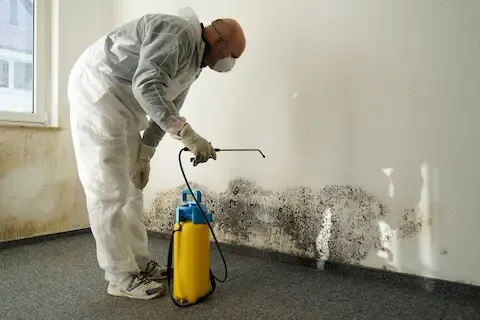
Black Mold in Huntsville Homes: ID, Health Risks, and Removal
Black mold is one of the most discussed and misunderstood problems in home ownership, and in Huntsville, Alabama, the combination of humidity, seasonal storms, and aging housing stock creates conditions where it can take hold quickly. Whether you have found a dark patch on your bathroom wall, noticed a musty odor in your basement, or recently dealt with water intrusion from a roof leak or flooding, understanding what you are actually looking at — and what to do about it — is essential before the situation worsens.
What Black Mold Actually Is
The term "black mold" is commonly used to refer to Stachybotrys chartarum, a species of mold that appears dark greenish-black and has a slimy texture when wet or a powdery appearance when dry. However, not every dark-colored mold growth is Stachybotrys. Other species including Cladosporium, Aspergillus niger, and Alternaria can also present in dark shades and still pose health concerns.
Stachybotrys is classified as a toxigenic mold because it can produce mycotoxins — specifically trichothecene mycotoxins — under the right conditions. These are secondary metabolites that the mold releases as it competes for resources. The mycotoxins are what make Stachybotrys particularly concerning compared to more common household molds.
Stachybotrys grows slowly and requires materials with a high cellulose content that have been persistently wet for 72 hours or longer. In Huntsville homes, common growth sites include drywall paper, ceiling tiles, wallpaper backing, wood framing behind water-damaged walls, and organic insulation materials. It is not typically the first mold to appear after water intrusion — faster-growing species like Penicillium and Aspergillus colonize first, which is why visible surface mold is not always Stachybotrys even when it looks dark.
Identifying Black Mold in Your Home
Visual identification alone cannot confirm Stachybotrys. Professional identification requires sampling and laboratory analysis. That said, there are signs that should prompt you to treat a mold situation with serious concern and pursue professional testing.
Look for the following indicators:
- Dark, irregularly shaped patches on walls, ceilings, or around window frames that appear greenish-black or charcoal in color
- Slimy or wet surface texture when the mold is actively growing in a moisture-rich environment
- Persistent musty odor that does not resolve after drying out a space — mold produces microbial volatile organic compounds (mVOCs) that cause this smell
- History of prolonged water damage such as a slow roof leak, chronic condensation, plumbing failure, or flooding that was not dried out within 48 to 72 hours
- Staining that returns after surface cleaning, which indicates active growth embedded in porous materials
If you find visible mold growth larger than 10 square feet, or if you suspect growth inside wall cavities, in your HVAC system, or beneath flooring, professional assessment is strongly recommended rather than attempting to identify and remediate the problem yourself.
Health Risks Associated with Black Mold Exposure
The health effects of black mold exposure vary based on several factors: the species present, the mycotoxin load, the duration of exposure, the occupant's age and immune status, and the size of the affected area.
For otherwise healthy adults, short-term low-level exposure may produce symptoms resembling allergies or a mild respiratory infection. These include nasal congestion, sneezing, coughing, skin irritation, and eye redness. These symptoms often improve when the person leaves the affected environment, which is an important clue that the home may be the source.
More significant or prolonged exposure, particularly in enclosed spaces with poor ventilation, can lead to more serious outcomes. These include:
- Chronic respiratory inflammation and worsened asthma symptoms
- Persistent fatigue and cognitive difficulty often described as "brain fog"
- Recurring headaches and sinus pressure
- Immune system suppression in individuals with underlying conditions
- Neurological symptoms in cases of heavy mycotoxin exposure — though this remains an area of ongoing medical research
Children, the elderly, pregnant women, and individuals with compromised immune systems are at significantly higher risk from mold exposure. In Huntsville households where young children or elderly family members are present, any confirmed or strongly suspected mold growth warrants prompt action.
It is worth noting that the CDC and EPA both acknowledge that mold — regardless of species — should be removed from indoor environments, and that a definitive link between specific health outcomes and Stachybotrys exposure in homes is still being studied. The important takeaway is that no mold growth indoors is acceptable, and toxic mold species require professional remediation protocols.
Common Locations for Black Mold Growth in Huntsville Homes
Huntsville's climate plays a direct role in mold risk. With hot, humid summers, periodic heavy rainfall, and a housing stock that includes many homes built in the 1960s through 1990s with older moisture barriers and insulation, the conditions for mold growth are frequently present.
The most common problem areas include:
- Crawl spaces and basements — Ground moisture vapor penetrates unencapsulated crawl spaces and creates persistent humidity that feeds mold on floor joists, subfloor sheathing, and insulation. Many Huntsville homes in established neighborhoods like Five Points and the older areas of Southeast Huntsville have crawl space configurations that are especially vulnerable.
- Attic spaces — Inadequate ventilation combined with roof leaks allows moisture to accumulate on roof decking and attic framing. Stachybotrys on roof sheathing is one of the more serious attic mold scenarios because it can spread extensively before it is noticed.
- Behind bathroom and kitchen walls — Slow leaks from supply lines, drain connections, or shower pans can saturate drywall over months without producing visible exterior staining until growth is already well established.
- Around HVAC equipment and ductwork — Condensation on supply ducts and air handler components in humid summers creates localized moisture. Mold growth inside HVAC systems is particularly problematic because the system can distribute spores throughout the entire home.
- Post-flood zones — Huntsville and surrounding Madison County are no strangers to flash flooding and storm damage. Homes that experienced water intrusion during severe weather events and were not properly dried and remediated within 72 hours are at high risk for secondary mold growth.
What Not to Do When You Find Black Mold
Homeowner responses to mold discovery often inadvertently worsen the problem. Understanding what to avoid is just as important as knowing the correct remediation steps.
Do not dry-brush or vacuum mold without containment. Disturbing mold colonies releases large quantities of spores into the air. Without proper containment barriers and negative air pressure, those spores travel through your home's air currents and can colonize new areas.
Do not attempt to bleach away mold on porous surfaces. Bleach is an aqueous solution — its active component does not penetrate into porous materials like drywall or wood. It removes surface staining but does not kill mold embedded in the material. The moisture from the bleach application can actually feed continued growth.
Do not run your HVAC system if mold growth is near or in the ductwork. This circulates contaminated air and spores to every room in the house. If you suspect HVAC involvement, switch to natural ventilation only until the system has been inspected and cleared.
Do not ignore musty odors after apparent drying. A persistent mold smell after a water damage event indicates active microbial growth even if it is not visible. Hidden growth behind walls or under flooring must be investigated.
Professional Black Mold Remediation: What the Process Involves
Professional Black Mold Remediation follows a structured protocol established by the EPA and industry bodies like the IICRC (Institute of Inspection, Cleaning and Restoration Certification). Understanding this process helps you evaluate whether a contractor is performing the work correctly.
The process includes:
- Assessment and testing — Air sampling, surface sampling, and visual inspection to confirm mold species, extent of growth, and affected materials. This step produces documentation for insurance purposes if applicable.
- Containment — Polyethylene sheeting is used to isolate the work area, and negative air pressure machines with HEPA filtration prevent spores from escaping to unaffected areas of the home.
- Personal protective equipment — Technicians working with confirmed or suspected Stachybotrys must wear full PPE including respirators rated N-95 or higher, protective suits, and gloves.
- Removal of contaminated materials — Porous materials including drywall, insulation, and wood framing that cannot be adequately cleaned are removed and disposed of according to local waste handling protocols.
- HEPA vacuuming and antimicrobial treatment — Structural surfaces are vacuumed with HEPA-filtered equipment and treated with EPA-registered antimicrobial agents. Air scrubbers run continuously during and after the work.
- Post-remediation verification — Clearance testing confirms that spore levels in the remediated area have returned to acceptable levels before containment is removed and reconstruction begins.
The moisture source that caused the mold growth must also be corrected before or during remediation. Remediating mold without addressing the moisture source guarantees recurrence.
Testing and Documentation in Huntsville
Mold testing in Huntsville should be performed by a qualified industrial hygienist or certified mold inspector who is independent from the remediation company. This separation of testing and remediation is a best-practice standard that protects you from conflicts of interest. The inspector identifies the problem; a separate contractor fixes it; the inspector returns to verify the fix worked.
Documentation matters for several reasons. If your home has been impacted by insurance-covered water damage, remediation records support your claim. If you are selling the home, documented mold remediation with clearance testing is far more defensible than an undisclosed history of mold issues. And if health symptoms in your family are potentially mold-related, documented testing and remediation records are important for medical consultation.
Madison County and the greater Huntsville area have experienced significant growth in residential construction, with many new builds in areas like Harvest and Meridianville. New construction is not immune to mold — improper moisture management during the building process or early occupancy with humidity control issues can lead to mold in newly constructed homes as well.
Preventing Recurrence After Remediation
Remediation is not a permanent solution unless the underlying conditions that created mold growth are corrected. For Huntsville homeowners, prevention centers on moisture control.
Key prevention measures include:
- Maintaining indoor relative humidity between 30% and 50% using air conditioning and dehumidifiers, particularly during Alabama's humid summer months
- Encapsulating crawl spaces with vapor barriers and ensuring proper drainage around foundation perimeters
- Inspecting and maintaining roof systems, gutters, and flashing annually to prevent water intrusion at the roofline
- Ensuring bathroom and kitchen exhaust fans are properly vented to the exterior — not into the attic
- Having HVAC systems serviced annually with attention to drain pans, coils, and ductwork condition
- Addressing any plumbing leak, roof leak, or water intrusion event within 24 to 48 hours to prevent conditions that support Stachybotrys establishment
If you have recently dealt with mold or water damage and want to understand your risks in more detail, reviewing resources on comprehensive mold assessment can help you ask the right questions when working with a remediation professional.
Making an Informed Decision About Your Home
Black mold in a Huntsville home is a serious problem, but it is also a solvable one when handled correctly. The critical variables are how quickly you act, whether you bring in qualified professionals for assessment and remediation, and whether the moisture source is permanently addressed. Cutting corners on any of these steps tends to produce the same outcome: mold returns, health symptoms persist, and the cost of remediation increases.
If you have identified suspected black mold growth or are dealing with the aftermath of water damage, start with a professional inspection before making any decisions about how to proceed. Understanding exactly what you are dealing with — species, extent, moisture source — is the foundation for every correct step that follows.
