Why Huntsville's 70 Percent Summer Humidity Triggers Mold Outbreaks
When summer humidity in Huntsville consistently hovers at 70 percent or higher, you're dealing with conditions that create perfect breeding grounds for mold throughout your property. The Tennessee Valley's geography traps moisture-laden air, creating sustained periods where indoor humidity levels spike beyond the critical 60 percent threshold that mold spores need to germinate and spread rapidly.
The Science Behind Huntsville's Mold-Triggering Humidity
Huntsville's location in the Tennessee Valley creates a natural basin effect where warm, humid air becomes trapped during summer months. This geographic positioning, combined with the region's abundant water sources and seasonal weather patterns, maintains outdoor humidity levels between 70-85 percent from June through August. When this moisture-heavy air infiltrates your home through normal air exchange, it raises indoor humidity to dangerous levels.
Mold spores require three conditions to activate: moisture, organic material, and temperatures between 77-86 degrees Fahrenheit. Huntsville's summer climate delivers all three consistently. Your home's building materials—wood framing, drywall, insulation, and even dust—provide abundant organic food sources. The sustained humidity provides the moisture trigger, while summer temperatures create the perfect incubation environment.
Research shows that mold growth accelerates exponentially once humidity exceeds 60 percent. At 70 percent humidity, visible mold colonies can establish within 48-72 hours on suitable surfaces. When Huntsville experiences weeks of 70+ percent humidity, you're facing continuous mold pressure that overwhelms most standard moisture control systems.
Critical Areas Where Summer Humidity Triggers Mold Growth
Your crawl space becomes ground zero for humidity-triggered mold outbreaks. Cool soil temperatures combined with warm, humid air create constant condensation on floor joists, ductwork, and insulation. Crawl spaces in Huntsville properties often register humidity levels 10-15 points higher than outdoor readings due to poor ventilation and moisture migration from the ground.
HVAC systems face enormous strain during high-humidity periods. When 70 percent humid air passes over cold evaporator coils, excessive condensation overwhelms drainage systems. This creates standing water in drip pans and ductwork, while fiberglass duct insulation absorbs moisture and becomes a mold cultivation medium. Supply and return ducts in unconditioned spaces like attics and crawl spaces are particularly vulnerable.
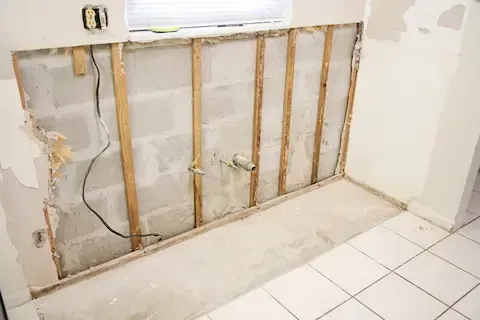
Wall cavities present hidden danger zones during sustained humidity. Exterior walls facing prevailing wind directions accumulate moisture through minor infiltration points around windows, doors, and penetrations. When indoor humidity reaches 70 percent, this moisture cannot escape, creating perfect conditions for mold growth within wall assemblies where detection is nearly impossible until significant damage occurs.
Basements and lower-level rooms suffer from humidity migration through foundation walls and floors. Concrete and masonry materials absorb ground moisture, then release it into interior spaces when humidity differentials shift. This process accelerates during Huntsville's humid summers, creating persistent moisture problems that standard dehumidification cannot address.
Understanding Mold Growth Acceleration in High Humidity
Mold growth follows predictable patterns when humidity sustains above 70 percent. Initial spore activation occurs within 24-48 hours on cellulose materials like paper-faced drywall and wood products. Visible colonies typically appear within 72 hours under optimal conditions, spreading rapidly across surfaces through airborne spore dispersal.
Different mold species thrive in Huntsville's specific humidity conditions. Aspergillus and Penicillium species dominate in moderately humid conditions, while Stachybotrys (black mold) requires sustained moisture levels that occur when humidity approaches 80 percent for extended periods. Each species produces distinct odors, health impacts, and structural damage patterns.
Professional mold prevention strategies must account for these growth acceleration factors. Once visible mold appears, the colony has likely been established for several days and has begun releasing thousands of spores into your indoor air. This is why humidity monitoring and proactive moisture control are essential rather than reactive mold removal.
Common Misconceptions About Humidity Control
Many Huntsville property owners believe running air conditioning continuously will control humidity effectively. However, oversized AC systems cycle on and off rapidly without adequate dehumidification time. This leaves indoor humidity elevated even when temperatures feel comfortable. Proper humidity control requires dedicated dehumidification capacity, not just temperature management.
Opening windows for "fresh air" during summer months actually introduces more humid air into your property. When outdoor humidity exceeds 60 percent, natural ventilation worsens indoor moisture conditions. This misconception leads many to unknowingly create ideal mold growth environments while attempting to improve air quality.
Portable dehumidifiers provide false security for whole-home moisture control. These units typically address only the immediate area and cannot handle the continuous moisture load that Huntsville's climate produces. Effective humidity control requires integrated systems that address moisture sources at entry points and maintain consistent conditions throughout the property.
Local Climate Factors Unique to Huntsville
The Tennessee Valley's topography creates specific moisture challenges that differ from other humid climates. Morning fog and dew formation occur frequently due to temperature inversions, adding moisture load to building exteriors that migrates indoors throughout the day. This pattern creates sustained humidity stress that standard construction methods cannot handle without additional moisture management.
Huntsville's rapid development has created urban heat island effects that alter local humidity patterns. Dense construction and reduced green space trap moisture-laden air, creating microclimates where humidity remains elevated longer than in surrounding areas. Properties in newer developments often experience more severe humidity-related mold issues than those in established neighborhoods with mature vegetation.
Seasonal weather transitions in the Tennessee Valley create particularly challenging conditions for mold prevention. Spring thunderstorms followed by hot, humid summers create moisture intrusion events that coincide with peak mold growth conditions. Understanding these patterns helps property owners time preventive measures for maximum effectiveness.
Professional Assessment and Prevention Strategies
Effective mold prevention begins with comprehensive moisture assessment using professional-grade hygrometers and thermal imaging equipment. These tools identify hidden moisture sources and humidity patterns that contribute to mold growth risk. Surface-level solutions cannot address the systematic moisture management required in Huntsville's challenging climate.
Whole-home dehumidification systems integrated with HVAC equipment provide consistent humidity control regardless of outdoor conditions. These systems maintain indoor humidity between 45-50 percent, creating conditions where mold cannot establish colonies even when spores are present. Professional installation ensures proper sizing and integration with existing equipment.
Building envelope improvements address moisture intrusion at source points. Proper air sealing, vapor barrier installation, and controlled mechanical ventilation work together to manage humidity loads before they reach critical levels. For comprehensive guidance on integrated moisture management approaches, reference the Huntsville water damage and mold prevention playbook which outlines systematic prevention strategies.
Long-term Moisture Management for Mold Prevention
Sustainable mold prevention requires ongoing humidity monitoring and system maintenance rather than reactive treatments. Professional moisture management programs include regular HVAC maintenance, ductwork inspection, and humidity level verification to ensure systems continue operating effectively against Huntsville's challenging climate conditions.
Property modifications may be necessary for older homes that were not designed for current humidity loads. Foundation waterproofing, improved insulation systems, and enhanced ventilation capacity help buildings cope with sustained high humidity periods that have become more frequent and intense in the Tennessee Valley region.
Understanding the direct relationship between Huntsville's summer humidity patterns and mold growth risk empowers you to take proactive measures before problems develop. When outdoor humidity consistently exceeds 70 percent, your property faces continuous mold pressure that requires professional-grade moisture management systems to control effectively.
