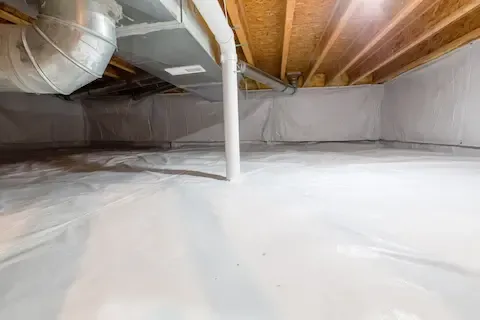
How North Alabama Clay Soil Drives Crawl Space Moisture in Huntsville
North Alabama's distinctive clay-heavy soil composition creates unique moisture challenges for homeowners throughout the Tennessee Valley region. This dense, impermeable soil acts like a natural barrier, preventing proper water drainage and forcing groundwater to accumulate around foundation structures. Understanding how your local soil conditions interact with your home's foundation system is essential for maintaining a dry, healthy crawl space environment.
Understanding North Alabama Clay Soil Characteristics
The Tennessee Valley's geological history left behind expansive clay deposits that define much of North Alabama's soil profile. These clay soils, particularly prevalent in Madison County and surrounding areas, contain high concentrations of montmorillonite and kaolinite minerals. When saturated, these clays expand significantly, creating hydrostatic pressure against foundation walls while simultaneously preventing water from percolating naturally through the soil profile.
Clay particles are microscopically small, typically measuring less than 0.002 millimeters in diameter. This fine texture creates an extremely dense soil matrix with minimal pore space for water movement. During Alabama's frequent rainfall events, water accumulates on the clay surface rather than infiltrating downward, leading to ponding conditions around your foundation perimeter.
The shrink-swell behavior of North Alabama clays creates additional complications. During dry periods, these soils contract and crack, allowing rapid water infiltration when rains return. This cycle creates unstable moisture conditions that directly impact crawl space humidity levels throughout the year.
How Clay Soil Forces Moisture Into Crawl Spaces
Clay soil's impermeability transforms your property into a collection basin for surface water and shallow groundwater. When rainfall exceeds the soil's limited infiltration capacity, water accumulates at the surface and flows laterally toward your foundation. This phenomenon, known as surface runoff concentration, directs moisture directly against your crawl space walls.
The hydrostatic pressure created by saturated clay soils can exceed 60 pounds per square foot against foundation walls. This pressure drives moisture through foundation materials via capillary action, even through seemingly solid concrete block or poured concrete foundations. Microscopic pores and hairline cracks become pathways for persistent moisture infiltration.
Ground-level crawl spaces are particularly vulnerable because they sit within the saturated soil zone during wet periods. The clay's water-holding capacity means that moisture remains in contact with foundation materials for extended periods, creating ideal conditions for ongoing moisture problems. Professional crawl space assessment can identify these moisture entry points before they escalate into serious problems.
Seasonal Moisture Patterns in Tennessee Valley Crawl Spaces
North Alabama's climate amplifies clay soil moisture issues through distinct seasonal patterns. Spring brings intense rainfall events that rapidly saturate clay soils, creating peak hydrostatic pressure conditions. The region's average annual precipitation of 54 inches concentrates heavily during March through May, overwhelming the clay's limited drainage capacity.
Summer humidity compounds moisture problems as warm, humid air enters crawl spaces and condenses on cooler surfaces. Clay soils retain moisture well into summer months, maintaining high relative humidity levels in crawl space environments even during drier surface conditions.
Fall and winter present unique challenges as clay soils undergo freeze-thaw cycles. These temperature fluctuations create additional foundation stress while maintaining elevated moisture levels. The result is year-round crawl space moisture exposure that requires comprehensive management strategies.
Foundation Drainage Solutions for Clay Soil Conditions
Effective crawl space moisture control in clay soil conditions requires engineered drainage solutions designed for low-permeability soils. French drain systems must incorporate larger aggregate materials and enhanced slope gradients to overcome clay's resistance to water movement. Standard residential drainage approaches often prove inadequate for North Alabama's challenging soil conditions.
Interior perimeter drainage systems offer superior performance in clay soil applications. These systems collect water at the foundation footer level, below the saturated clay zone, and actively remove it through sump pump mechanisms. The controlled environment allows for reliable water removal regardless of exterior clay soil conditions.
Vapor barriers become critical components in clay soil moisture management. Six-mil polyethylene sheeting provides minimal protection against the persistent moisture drive from clay soils. Professional-grade vapor barrier systems using reinforced materials and sealed seaming techniques create effective moisture barriers suited to high-pressure conditions.
Professional Moisture Management Strategies
Clay soil moisture infiltration often requires professional intervention due to the complex interaction between soil conditions, foundation materials, and moisture dynamics. Professional moisture management begins with comprehensive site evaluation, including soil percolation testing, foundation moisture assessment, and crawl space environmental monitoring.
Encapsulation systems designed for clay soil conditions incorporate multiple moisture control technologies. These systems combine perimeter drainage, vapor barriers, mechanical ventilation, and dehumidification to create controlled crawl space environments that resist moisture infiltration from challenging soil conditions.
Professional remediation may also address existing moisture damage through mold treatment, structural drying, and foundation sealing techniques. For comprehensive information about addressing existing moisture damage, consult our complete crawl space mold remediation guide for detailed treatment protocols.
Long-Term Maintenance Considerations
Clay soil moisture management requires ongoing maintenance attention due to the persistent nature of these challenging soil conditions. Drainage systems require regular inspection and cleaning to maintain effectiveness against clay soil's tendency to clog drainage pathways with fine sediments.
Vapor barrier systems need periodic inspection for damage or displacement. Clay soil's expansive properties can stress foundation materials and potentially compromise vapor barrier integrity over time. Annual professional inspections help identify maintenance needs before moisture problems develop.
Mechanical systems including sump pumps, fans, and dehumidifiers require regular maintenance to ensure reliable operation during peak moisture seasons. Backup power systems become important considerations given the critical role these systems play in moisture control.
Investment Protection Through Proactive Management
Addressing North Alabama clay soil moisture challenges proactively protects your property investment while avoiding costly remediation expenses. Professional moisture management systems typically cost significantly less than structural repairs, mold remediation, and foundation restoration required when moisture problems advance unchecked.
Property values throughout the Huntsville area benefit from documented crawl space moisture management, particularly in neighborhoods where clay soil issues are well-known concerns. Professional moisture management creates marketable property improvements that appeal to informed buyers who understand local soil challenges.
The health benefits of controlled crawl space moisture extend throughout your home environment. Reduced humidity levels improve indoor air quality, reduce allergen accumulation, and create more comfortable living conditions for your family year-round.
