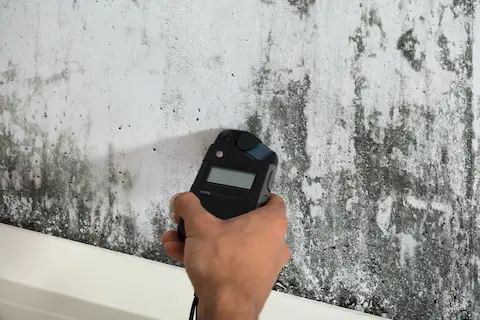
Post-Remediation Verification: Why Huntsville Owners Demand It
Mold remediation is not complete the moment a contractor packs up their equipment and hands you an invoice. The work may look finished — plastic sheeting removed, surfaces wiped clean, air scrubbers loaded back into the van — but without independent verification, you have no way of knowing whether the contamination is actually gone. Post-remediation verification is the structured process that closes that gap, and in Huntsville, Alabama, where humidity, aging housing stock, and seasonal weather events create persistent mold pressure, savvy property owners are increasingly treating it as non-negotiable.
What Post-Remediation Verification Actually Is
Post-remediation verification, often called clearance testing, is an independent assessment conducted after mold remediation work is complete. The purpose is to confirm that the affected area has been returned to a normal fungal ecology — meaning mold spore counts, species composition, and visible conditions all fall within acceptable parameters compared to an outdoor or unaffected indoor baseline.
The term "clearance" is precise. It does not mean zero mold. Mold spores exist everywhere, indoors and outdoors, at all times. Clearance means that the remediated area is no longer elevated relative to normal background levels and that no visible mold growth remains. This distinction matters because some remediation companies will claim success based solely on visual inspection. A visual inspection alone is not verification — it is an opinion.
Proper post-remediation verification typically includes three components. First, a visual inspection by the verifying professional to confirm no visible mold growth, no residual debris, and appropriate drying conditions. Second, air sampling using spore trap cassettes or similar devices to capture and count airborne mold spores. Third, surface sampling if the inspection or air results suggest potential issues, using swab, tape lift, or bulk methods to identify what is present on specific surfaces.
These samples are sent to an accredited laboratory, usually with a two-to-five business day turnaround, and the results are compared against pre-remediation baseline samples and outdoor control samples taken on the same day. The final deliverable is a written clearance report from the verifying professional stating whether the remediation passed or failed.
Why Huntsville Properties Face Elevated Mold Risk Year-Round
Huntsville's climate creates conditions that make mold a persistent concern rather than a one-time event. The region sits in a subtropical humid zone where summer dewpoints routinely exceed 70°F. Moisture intrusion is not hypothetical — it is a constant pressure on building envelopes. Crawl spaces in older Madison County homes are particularly vulnerable, as many were constructed before vapor barrier standards were well-established, and the ground beneath them stays damp through much of the year.
Seasonal events compound the problem. Heavy spring rainfall, tropical moisture from Gulf systems tracking north, and the freeze-thaw cycles of Huntsville winters all contribute to water intrusion events. Flooding along Aldridge Creek, drainage problems in older neighborhoods near downtown, and ice-driven roof damage in colder months create ideal conditions for mold to establish quickly. Once established in wall cavities or under flooring, mold can generate enough spore pressure to affect air quality throughout the home within weeks.
All of this means that remediation in Huntsville is rarely a simple one-room cleanup. It often involves multiple affected assemblies — walls, subfloors, HVAC components, and attic sheathing — and the remediation itself can disturb and redistribute spores if not done correctly. Verification after the work confirms not just that surfaces are clean, but that the project did not create secondary contamination in adjacent areas.
Who Should Perform the Verification and Why Independence Matters
One of the most important principles in post-remediation verification is the separation between the company that performs the remediation and the professional who performs the verification. Allowing a remediation contractor to issue their own clearance is a direct conflict of interest. They have a financial incentive to declare the work complete. An independent verifier has no such incentive — their professional credibility depends on accurate, unbiased results.
In Alabama, indoor environmental professionals who perform mold assessments and clearance testing are typically certified through national credentialing bodies such as the American Council for Accredidented Certification (ACAC) or the Indoor Air Quality Association. Look for credentials such as Certified Indoor Environmentalist (CIE), Council-certified Microbial Consultant (CMC), or Certified Indoor Air Quality Professional (CIAQP). While Alabama does not currently require state licensure for mold assessors, working with a credentialed professional gives you a baseline of accountability.
The laboratory processing your samples should also be accredited. Look for labs that hold accreditation through the American Industrial Hygiene Association (AIHA) Environmental Microbiology Laboratory Accreditation Program (EMLAP). Accredited labs use standardized methods, participate in proficiency testing, and produce results that hold up to scrutiny if questions arise later — including in insurance claims or legal disputes.
If you are working with Post-Remediation Verification professionals in Huntsville, confirm upfront that the person conducting verification is independent of the remediation contractor and that laboratory analysis will be performed by an AIHA-accredited facility. Both of these conditions should be confirmed in writing before work begins.
What the Clearance Report Should Contain
A clearance report is a legal document in the practical sense — it may be used in real estate transactions, insurance claims, contractor disputes, or health-related legal proceedings. Knowing what a thorough report should contain helps you evaluate whether what you receive is adequate.
The report should begin with a project summary identifying the property address, the remediation contractor, the scope of the remediation project, and the date verification was performed. It should include the verifying professional's name, credentials, and contact information. The inspection narrative should describe conditions observed during the visual walk-through, including moisture readings taken with a calibrated moisture meter, any remaining visible concerns, and the specific areas sampled.
Sampling methodology should be documented in detail — which sampling method was used, how many samples were collected, where each sample was taken, the chain of custody for samples shipped to the laboratory, and the name and accreditation status of the laboratory. The report should include the actual lab results as an attachment, not a summary created by the verifier. You want the raw data.
The analytical results section should compare indoor air samples from remediated areas against outdoor control samples collected simultaneously, and against any pre-remediation baseline samples if available. Finally, the report should contain a clear professional conclusion: the remediation either meets or does not meet clearance criteria, with specific reasoning. If it does not pass, the report should identify what additional work is needed before re-testing.
Common Situations That Trigger Failed Clearance
Understanding why clearances fail helps you set realistic expectations and hold your remediation contractor accountable for quality work. The most common failure modes involve shortcuts taken during the remediation itself.
Incomplete removal is the primary cause. Remediators who cut corners will sand or encapsulate mold-stained material rather than removing it. Sanding releases massive quantities of spores that settle throughout the work area and surrounding spaces. Encapsulants seal the surface but do not address underlying growth — and in Huntsville's humidity, mold beneath an encapsulant will continue growing until conditions change. Air sampling after encapsulation will often reveal elevated spore counts because the source is still active.
Containment failures are the second major issue. Proper remediation requires negative air pressure in the containment zone and physical barriers that prevent cross-contamination. If containment was inadequate, spores released during the removal process migrate to adjacent rooms, return air vents pull contaminated air through the HVAC system, and post-remediation air samples in unaffected areas come back elevated. Now the scope of the problem is larger than it was before remediation began.
Moisture source unresolved is the third failure mode — and arguably the most consequential. If the water intrusion that caused the original mold growth has not been repaired, the remediation is temporary. Mold will return within weeks or months. Clearance testing performed immediately after remediation may pass, but the property will fail again at subsequent testing. Verification professionals in Huntsville look for this specifically, taking moisture readings in structural assemblies and asking about confirmed repairs to roofing, plumbing, drainage, and HVAC condensate systems before issuing clearance.
Who Pays for Post-Remediation Verification
The cost of post-remediation verification typically falls to the property owner, though this is not always obvious from contractor estimates. Remediation contractors often price their work to include a visual inspection at completion, but not independent third-party air sampling. These are different services, and conflating them will leave you with no enforceable proof of clearance.
In insurance-covered remediation claims, some policies will cover clearance testing costs as part of the claim. Review your policy language carefully, and ask your adjuster directly whether clearance testing is a covered cost. If the claim is related to a contractor's error — a plumbing failure or roofing defect that caused water intrusion — the responsible contractor's liability policy may cover both remediation and verification costs.
In real estate transactions, the buyer typically requests clearance testing as a condition of sale when mold has been disclosed or discovered during inspection. Negotiating this in writing, with the seller bearing the cost of remediation and the cost of successful clearance testing, protects the buyer from inheriting an unresolved problem. Sellers who resist this arrangement are sellers who are not confident in the quality of their remediation work.
Expect to pay between $300 and $600 for professional post-remediation verification in the Huntsville area, depending on the size of the affected area, the number of samples collected, and the turnaround time selected for laboratory analysis. This is a modest cost relative to the value of the assurance it provides — or the cost of a remediation that has to be redone because failure was not caught early.
What to Demand in Writing Before and After Remediation
Documentation discipline is what separates property owners who get resolution from those who get promises. Before remediation begins, you should have a signed remediation protocol that describes the scope, containment procedures, personal protective equipment requirements, and disposal methods. This document tells you what the contractor committed to doing — and gives you a baseline to evaluate whether they followed through.
After remediation and before verification, request moisture readings from the contractor showing that all affected assemblies have dried to acceptable levels. Drywall should be below 12 to 15 percent moisture content; wood framing and subfloor should be below 19 percent. High moisture readings at clearance time mean the material has not dried adequately, and air sampling under these conditions will often fail because microbial activity continues in wet substrates.
After clearance testing, keep the full clearance report — including lab results — in a permanent file for the property. If you sell the home, this documentation becomes a disclosure asset. If mold returns, it helps establish whether a new problem has developed or whether the original remediation was inadequate. If a contractor disputes payment, it provides evidence of whether their work met professional standards.
For more background on how mold spreads through a structure and what remediation involves before clearance can be sought, see the resources on the Huntsville Mold Pros website that address the full scope of assessment and treatment services available to Madison County property owners.
The Standard Huntsville Owners Should Hold Contractors To
The remediation industry is not uniformly regulated, and the quality of work varies significantly between contractors. In Huntsville, where the combination of climate conditions and aging housing creates complex mold problems, the difference between a thorough job and a superficial one is not always visible to the naked eye. That is precisely why clearance testing exists.
Demand that your remediation contractor, before they begin, acknowledge in writing that independent third-party clearance testing will be required as a condition of final payment. Reputable contractors welcome this — it protects their reputation and confirms their work. Contractors who resist or discourage verification are telling you something important about their confidence in the quality of what they are about to do.
Verification is not an indulgence or a luxury tier of service. It is the minimum standard of accountability for work that directly affects the structural integrity of your property and the health of everyone who lives or works in it. In Huntsville's environment, treating it as optional means accepting remediation outcomes on faith. Demanding it in writing means accepting them on evidence.
