Summer AC Use and Hidden HVAC Mold Growth in Huntsville Homes
Huntsville summers are brutal. From June through September, your air conditioner runs almost continuously, working against humidity levels that routinely push into the 70-90% range before the system pulls that moisture indoors. What most homeowners never consider is that this continuous operation creates ideal biological conditions inside the very equipment meant to keep you comfortable. Mold does not need a flood or a leak to establish itself in your HVAC system. It needs moisture, a surface, and time — and your AC unit provides all three in abundance during peak cooling season.
Why Peak Cooling Season Creates Peak Mold Risk
When your AC runs for extended periods, the evaporator coil sits at or below the dew point for hours at a stretch. Moisture condenses on the coil surface constantly, and that condensation is supposed to drain away through a condensate line. In Huntsville's summer climate, however, the volume of moisture is significant, and the drain system often cannot keep pace. Partial blockages, biofilm buildup inside drain pans, and slow-draining lines allow standing water to persist inside the air handler unit — sometimes for days at a time.
That standing water, combined with the dark, enclosed space of your air handler cabinet and the organic dust particles moving through the system, creates a nutrient-rich environment where mold colonies can establish within 24 to 48 hours. Once established, spores circulate through the entire duct network every time the blower runs. By mid-summer, what started as a damp drain pan can become a system-wide contamination problem affecting every room in your home.
The Components Most Vulnerable to Summer Mold Growth
Understanding where mold hides first helps you know what to inspect and when to call for professional help. These are the areas that carry the highest risk during Huntsville's cooling season:
Evaporator coil fins: Dust and debris collect on wet coil surfaces, forming a layer of organic material that mold colonizes rapidly. A dirty coil is not just an efficiency problem — it is a mold substrate.
Condensate drain pan: The flat pan beneath the evaporator coil collects all condensation before it drains away. Algae and mold growth in this pan is extremely common and often goes unnoticed for an entire season.
Condensate drain line: A slow or partially blocked drain line creates backpressure that keeps the pan wet. Biofilm grows inside plastic drain lines and progressively narrows the opening.
Air handler cabinet interior: The insulation lining inside many air handler cabinets absorbs moisture and holds it. This porous material is one of the most problematic mold sites in residential HVAC systems.
Return air plenum and filter housing: If your filter fits loosely or gets bypassed, unfiltered air deposits particles directly onto the interior surfaces of the plenum, where they combine with ambient moisture to feed mold growth.
Flexible ductwork: Flex duct used in many Huntsville homes has a corrugated interior surface where dust accumulates in low-flow areas. Moisture intrusion from condensation or duct leaks turns those areas into mold-prone zones.
Signs Your HVAC System Has Developed a Mold Problem
HVAC mold rarely announces itself with visible growth on surfaces you can see. The signs are more often sensory and symptomatic, which makes them easy to dismiss or attribute to other causes. Watch for these indicators during the summer months:
A musty or earthy odor that appears when the system first starts, then fades as the house airs out — only to return when the AC cycles on again
Increased allergy symptoms, nasal congestion, or eye irritation that seem worse indoors and improve when you leave the house
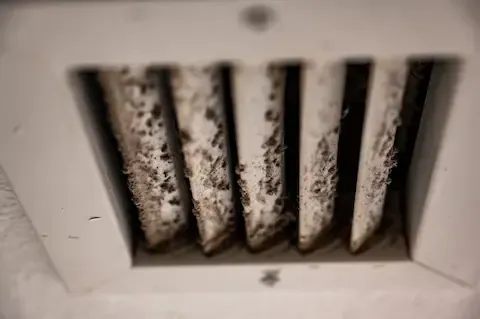
Visible discoloration around supply vents, particularly gray or black streaking on the vent grilles or the wall and ceiling surrounding them
Water stains near the air handler or in the space below it, indicating the drain pan has overflowed
A gradual decline in system efficiency — mold-coated coils and restricted drain lines both reduce the unit's ability to dehumidify and cool effectively
If you are seeing two or more of these signs together during peak summer operation, the likelihood of active mold growth somewhere in the system is significant. For guidance on what a professional inspection and removal process looks like, the HVAC mold removal guide for Huntsville provides a detailed overview of what to expect.
Mid-Season Inspection Checklist for Huntsville Homeowners
A mid-summer check performed in July or early August gives you the best chance of catching mold development before it spreads system-wide. Here is a practical checklist you can work through yourself, with the understanding that some steps require a technician or remediation professional:
Check the condensate drain pan: Turn off the system, locate the air handler, and inspect the drain pan with a flashlight. Look for standing water, slime, or discoloration. A small amount of residual moisture is normal. Standing water or a brown or black film is not.
Test the drain line: Pour a small amount of water into the drain pan and verify it drains promptly. If water sits for more than a few minutes, the line is partially blocked and needs to be cleared.
Inspect visible duct connections: Look at the joints where ducts connect to the air handler and to registers. Separation, disconnection, or visible moisture damage at these points allows unconditioned attic air — extremely humid in Huntsville's summer — to enter the duct system.
Check and replace your air filter: A filter that has been running for more than 60 days in summer is likely restricting airflow. Restricted airflow reduces the coil's ability to drain condensation properly, which increases moisture retention inside the unit.
Smell the supply air at multiple registers: Stand near a supply vent while the system runs and breathe normally. A neutral or slightly cool-air smell is expected. A musty or biological odor means spores are actively circulating from somewhere in the system.
Look at vent grilles for discoloration: Remove a few vent grilles and inspect the interior of the duct behind them with a flashlight. Dark spotting on the duct lining or on the grille itself warrants professional inspection.
Mid-Season Cleaning Protocol
If your inspection turns up early-stage issues — mild drain pan buildup, a slow drain line, or a dirty filter — you can address these with targeted maintenance before they escalate. Flush the condensate drain line with a diluted bleach solution or a commercial drain pan treatment tablet designed for HVAC use. Replace the air filter with a correctly sized filter and verify it seats snugly in the housing. Wipe down accessible interior surfaces of the air handler cabinet with an EPA-registered disinfectant appropriate for HVAC components.
These steps address maintenance-level moisture management. They are not a substitute for professional remediation if mold has already established itself on coil fins, inside ducts, or on cabinet insulation. Cleaning moldy HVAC components without the proper containment and treatment approach can disperse spores more broadly through your home than the original contamination.
When to Call a Professional for Huntsville HVAC Mold
Certain findings during your mid-season check require professional intervention rather than DIY cleaning. Contact a qualified remediation service if you find visible mold growth on the evaporator coil, inside the air handler cabinet, or inside the ductwork. The same applies if you have had repeated drain pan overflows in a single season, if the musty odor returns after you have already cleaned the drain system, or if household members are experiencing respiratory symptoms that correlate with system operation.
Professional HVAC Mold Remediation in Huntsville involves more than surface cleaning. It includes coil treatment, drain system sanitization, duct inspection, and in some cases replacement of contaminated liner materials inside the air handler. Attempting these procedures without professional training and equipment risks both incomplete treatment and wider spore dispersal.
Keeping Ahead of the Problem Through the Season
Huntsville's cooling season is long enough that mold problems initiated in June can become serious by August if left unaddressed. The homeowners who avoid significant remediation costs are those who treat mid-season maintenance as a standard part of summer ownership — not an optional upgrade. Check your system in July. Replace filters on schedule. Monitor your drain pan. Know what a clean, well-functioning system smells and feels like so you recognize when something changes. That awareness is the most effective mold prevention tool available to any homeowner running their AC through a Huntsville summer.
