Attic Mold Removal: Huntsville Roof and Insulation Guide
Attic mold is one of the most frequently overlooked problems in Huntsville homes — and one of the most consequential. Because most homeowners rarely climb into their attic space, mold colonies can establish themselves across roof decking, rafters, and insulation batts for months before anyone notices. By the time a musty odor or visible stain signals a problem, the affected area is often substantial. Understanding why attic mold develops in North Alabama's climate, how to identify it accurately, and what removal actually entails can help you make smarter decisions before the damage spreads.
Why Huntsville Attics Are Particularly Vulnerable
North Alabama's climate creates a specific set of conditions that make attic mold more likely than in drier regions. Huntsville experiences hot, humid summers with relative humidity that frequently exceeds 70 percent, combined with cold winter periods that cause significant temperature swings between the attic space and the living area below. This thermal differential drives moisture movement.
When warm, humid interior air migrates upward through ceiling penetrations — light fixtures, HVAC boots, attic hatches — it meets the cooler underside of the roof decking and condenses. That condensation, repeated over weeks and months, creates a persistently damp surface where mold spores can germinate. Add seasonal rain events and the risk compounds quickly. Huntsville's position in the Tennessee Valley also means it receives significant annual rainfall, making roof integrity a direct factor in attic mold risk.
Roof Leaks as the Primary Catalyst
A slow roof leak does not always announce itself with a ceiling stain. Water that enters through compromised flashing, cracked ridge caps, or deteriorated shingles often travels laterally along roof decking before dripping onto insulation below. The result is a wet insulation layer that holds moisture for extended periods without drying — exactly the environment mold requires.
After significant storms — which are common in Madison County during spring and fall — roof penetration points are especially vulnerable. Satellite dish mounts, ventilation pipes, and older chimney flashing are frequent entry points. If your home sustained wind damage or had shingles replaced in the last few years, an attic inspection following any major weather event is a reasonable precaution. Early detection of a leak means early detection of mold risk.
Ventilation Failures and Their Consequences
Attic ventilation exists for a reason: it prevents heat and moisture buildup by allowing outside air to move continuously through the space. A properly designed attic ventilation system balances intake at the soffit with exhaust at the ridge, creating airflow that carries moisture out before it can condense on structural surfaces.
Many older Huntsville homes — particularly those built before modern ventilation codes were enforced — have inadequate soffit venting, blocked baffles, or ridge vents that have been covered by insulation pushed too far toward the eaves. When ventilation fails, moisture accumulates. Even without a roof leak, the natural moisture load from a family living below can be enough to sustain mold growth on roof decking when airflow is restricted.
Improperly vented bathroom exhaust fans are a particularly common culprit. Fans that terminate inside the attic space rather than exhausting through the roof or a soffit vent dump warm, humid air directly into an enclosed cavity every time someone showers. Over time, this creates a localized high-moisture zone that fosters mold growth, often concentrated near the fan's termination point.
Insulation Problems That Trap Moisture
Insulation itself does not cause mold — but certain insulation failures create the moisture conditions that support it. Fiberglass batt insulation that has been compressed, disturbed, or improperly installed loses its ability to resist vapor movement. When the kraft paper facing on insulation batts is installed facing the wrong direction, moisture from below is driven into the insulation body rather than blocked.
Blown cellulose insulation is particularly susceptible to moisture retention. Once wet, cellulose holds water for a long time and can sustain mold growth both on the insulation itself and on the roof decking it contacts. In many Huntsville attic mold cases, the insulation must be removed entirely before the structural surfaces below can be properly treated and dried.
If you are considering adding insulation to improve energy efficiency, it is worth having the attic assessed first. Adding new insulation over existing wet or mold-contaminated material seals in a problem rather than resolving it. This is a mistake that delays remediation and can significantly increase the eventual scope of work required.
Identifying Attic Mold Correctly
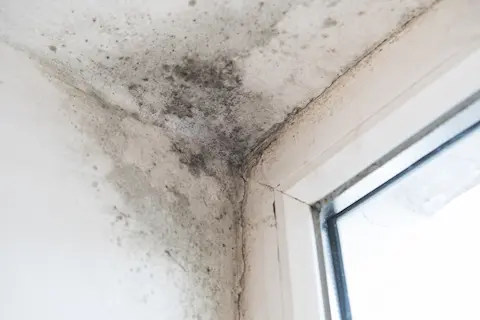
Not everything dark on roof decking is mold. Roof decking often develops staining from tannins in the wood, from dust accumulation, or from minor oxidation — none of which require remediation. True mold growth typically presents as fuzzy or powdery discoloration that smears or brushes away, often accompanied by a musty odor. Black, green, and white are all common mold colors in attic environments.
A surface tape lift sample sent to an accredited lab can confirm whether organic growth is present and identify the mold species involved. This matters because the remediation protocol for surface mold differs from the approach required for deeply penetrated wood rot combined with mold. Professional assessment before committing to a remediation approach saves both time and money.
For homeowners in Huntsville who have recently purchased an older property — particularly in neighborhoods like Five Points, Blossomwood, or the older residential areas near downtown — an attic inspection is a worthwhile part of any home assessment process. Older construction is more likely to have accumulated ventilation deficiencies or deferred roof maintenance that create latent mold risk.
What Attic Mold Removal Actually Involves
Attic mold remediation is not a surface cleaning job. Effective removal requires containing the work area to prevent spore dispersal into the living space below, physically removing contaminated insulation, treating affected structural surfaces with appropriate antimicrobial agents, and — in cases of significant wood degradation — mechanical removal of the compromised material itself.
HEPA air filtration during the remediation process is standard practice for professional work. Mold spores disturbed during cleaning become airborne and can settle into HVAC systems, living areas, or new insulation if not captured during the work process. A negative pressure containment setup prevents cross-contamination.
After structural surfaces are cleaned and dried, the underlying moisture source must be addressed. No remediation is durable if the roof leak, ventilation failure, or vapor pathway that created the problem is left in place. This is why attic mold work often involves coordination between mold remediation professionals and roofing contractors — the mold removal and the moisture source correction must happen in sequence.
For comprehensive treatment of homes with mold in multiple areas, understanding the whole-home mold remediation process for Huntsville is a useful starting point before scoping the project.
After remediation is complete, new insulation is installed and ventilation corrections are made — adding soffit baffles, extending exhaust fan terminations through the roof, or supplementing ridge venting as required by the specific deficiencies identified.
Prevention and Long-Term Maintenance
Preventing attic mold recurrence in a Huntsville home requires addressing the three factors that create it: moisture intrusion, poor ventilation, and insulation deficiencies. Annual roof inspections following storm season, confirmation that bathroom and kitchen exhaust fans terminate properly outside the building envelope, and periodic attic checks for condensation or staining are the core of a practical maintenance approach.
Attic hatch covers and pull-down stair assemblies are often poorly air-sealed, allowing conditioned interior air to flow freely into the attic space. Weatherstripping and insulated cover panels for these openings significantly reduce the moisture load the attic must manage.
If you notice a musty smell in upper-floor rooms, find staining on your ceiling, or have experienced roof damage, do not wait to investigate. Residential Mold removal addressed early is substantially less disruptive and less expensive than remediation undertaken after a problem has been allowed to expand across large sections of roof decking and structural framing.
Choosing the Right Professional for Attic Mold Work
Attic mold work in Huntsville requires professionals who understand both the remediation process and the building science factors that created the problem. A company that cleans mold surfaces without addressing moisture sources will leave you with a recurring problem. Look for professionals who conduct a root-cause assessment before proposing a scope of work, who provide documentation of the remediation process for insurance or real estate disclosure purposes, and who coordinate necessary building envelope repairs as part of the overall project.
Remediation work in attic spaces requires proper respiratory protection, containment protocols, and disposal of contaminated materials in accordance with applicable guidelines. This is not a DIY project category where shortcuts are appropriate — the consequences of incomplete attic mold removal extend to structural integrity, indoor air quality, and long-term property value in a market like Madison County where home inspections routinely include attic assessments.
