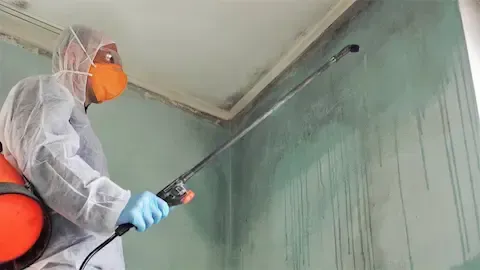
Why Huntsville Bathrooms Develop Mold Faster Than National Average
Huntsville consistently records higher indoor mold complaint rates than many comparably sized cities across the country, and the reasons go well beyond simple humidity. The Tennessee Valley's geography traps warm, moisture-laden air against the foothills, creating a persistent outdoor humidity baseline that most northern or western cities never experience. When that air enters your home and meets a bathroom that was designed to national code minimums rather than regional climate realities, the conditions for accelerated mold growth are already in place before a single drop of water hits the floor.
Huntsville's Humidity Load Is Structurally Different
The national average indoor relative humidity recommendation sits between 30 and 50 percent. Huntsville's outdoor humidity routinely pushes 70 to 90 percent during summer months, and that moisture infiltrates homes continuously through foundation gaps, door seals, and HVAC returns. Bathrooms in Huntsville are therefore starting at a higher baseline moisture level before any shower is run or any faucet is turned on.
The Tennessee Valley's bowl-shaped terrain amplifies this effect. Cool air drainage from Monte Sano and the surrounding ridgelines meets warm valley air overnight, producing condensation events that affect not just outdoor surfaces but poorly insulated interior walls. Exterior bathroom walls in Huntsville homes, particularly those on the north or northeast faces, experience temperature differentials that cause moisture to condense inside wall cavities where no ventilation fan can reach it.
This is not a maintenance failure on the homeowner's part. It is a structural mismatch between standard building practices and the specific climate zone Huntsville occupies.
Why Standard Ventilation Fans Underperform Here
Most residential bathroom exhaust fans are rated in cubic feet per minute for a generalized climate assumption. The standard recommendation is one CFM per square foot of bathroom floor space. That formula was developed with average-humidity markets in mind. In Huntsville, that baseline is already higher, which means the standard CFM rating is insufficient before you factor in actual shower use.
A 50-square-foot bathroom in Phoenix might be adequately served by a 50 CFM fan. The same bathroom in Huntsville, with its higher ambient humidity and dense warm air, needs meaningfully more airflow to achieve the same moisture reduction outcome. Many Huntsville homes, particularly those built between the 1970s and early 2000s, were installed with fans sized to national minimums and never upgraded when the HVAC system or bathroom layout changed.
Compounding the problem is fan placement. Fans installed over the toilet rather than adjacent to the shower capture far less moisture at its source. In older ranch-style homes common in Madison County, duct runs to exterior vents are sometimes long or include multiple bends that reduce effective airflow by 20 to 40 percent. The fan may run, but it is not moving enough air to compensate for Huntsville's humidity reality.
Tile and Grout as Mold Infrastructure
Tile itself is resistant to mold, but the grout lines between tiles are not. Grout is porous by nature, and in high-humidity environments it absorbs moisture continuously. In Huntsville bathrooms where ventilation is marginal, grout lines stay damp long after a shower ends. That sustained moisture, combined with soap residue and skin cells that accumulate in grout, creates a near-ideal growth substrate for mold and mildew.
The tile mold growth pattern in Huntsville homes follows a predictable sequence. Mold appears first in lower grout lines near the floor, where moisture pools. It migrates upward along vertical grout lines as humidity cycles keep the surface intermittently wet. Within months, it reaches the ceiling line and begins colonizing caulk joints, which are even more porous than grout. By the time most homeowners address it visually, the colony has been establishing itself for weeks or longer.
Unsealed or under-sealed grout accelerates this cycle significantly. Many tile installations in Huntsville receive one coat of grout sealer at installation and are never resealed. In a low-humidity market, that may be adequate for years. In Huntsville's climate, grout sealer degrades faster under constant moisture exposure and typically needs refreshing every 12 to 18 months to maintain its protective function.
HVAC Interactions Most Homeowners Overlook
Central air conditioning in Huntsville runs for a substantial portion of the year. When the system cycles off during mild days, or when bathroom doors stay closed and exclude the bathroom from conditioned air circulation, localized humidity spikes occur. Bathrooms on the second floor of two-story homes in areas like Jones Valley and Hampton Cove are particularly susceptible because warm humid air rises and accumulates near ceiling corners where mold consistently appears first.
Ductwork that terminates near but not inside the bathroom, a common configuration in original construction homes across Huntsville's older neighborhoods, allows the bathroom to function as a dead zone in the home's humidity management system. The HVAC dehumidifies the rest of the house while the bathroom accumulates moisture. Combined with an undersized exhaust fan and unsealed grout, this creates the accelerated mold timeline that distinguishes Huntsville bathrooms from national averages.
What Fixes Actually Work in This Climate
Addressing bathroom mold in Huntsville requires solutions calibrated to regional conditions rather than general best practices. Upgrading exhaust fans to a minimum of 1.5 CFM per square foot, installing humidity-sensing fan controls that run until relative humidity drops below 60 percent, and verifying that duct runs are short and straight all produce measurable improvement. Resealing grout annually rather than on a national-average schedule closes the moisture absorption pathway that feeds ongoing growth.
For homeowners dealing with active mold rather than prevention, understanding the scope of the problem is the first step. Surface mold on grout is a different situation than mold that has penetrated drywall behind tile or colonized ceiling insulation above the bathroom. If you are managing an active situation, reviewing a bathroom and kitchen mold removal guide specific to Huntsville conditions will help you understand what can be handled with cleaning products and what requires professional remediation.
Persistent mold that returns within weeks of cleaning, discoloration that bleeds through paint, or mold appearing on exterior walls rather than just shower surfaces all indicate that the problem has moved beyond surface maintenance. At that stage, professional assessment is necessary to determine whether moisture is entering through the wall assembly itself, which is a common finding in Huntsville homes where exterior insulation is minimal and humidity differentials are high.
If you suspect the mold in your bathroom has moved beyond surface grout lines, bathroom mold assessment by a qualified professional can identify the full scope before remediation begins. This matters in Huntsville specifically because surface treatment without addressing the underlying moisture pathway produces results that last weeks, not months.
The Practical Takeaway for Huntsville Homeowners
Huntsville bathrooms develop mold faster than national averages because the climate imposes a humidity baseline that standard construction practices do not account for. Ventilation systems designed for average markets underperform here. Grout and caulk degrade faster under continuous moisture exposure. HVAC configurations common in local housing stock leave bathrooms partially excluded from whole-home humidity management. These are structural and climatic factors, not cleanliness failures, and they require solutions matched to what Huntsville's specific environment actually demands.
