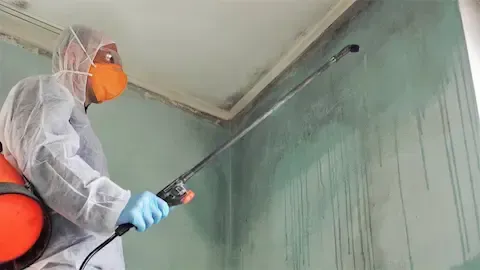
Removing Mold from Bathroom Caulk and Grout in Huntsville Homes
Bathroom mold in Huntsville is not a cosmetic inconvenience. The combination of hot summers, high outdoor humidity, and the moisture generated inside bathrooms creates conditions where mold on caulk and grout can escalate quickly. Understanding whether you can clean what you see or whether the material itself needs to come out is the most important decision you will face when dealing with tile mold in a Huntsville home.
Why Bathroom Caulk and Grout Are Prime Targets for Mold
Caulk and grout share a quality that makes them unusually vulnerable to mold: they are porous and they hold moisture. Grout, being cement-based, absorbs water and provides a stable surface where mold spores can anchor and feed. Caulk, particularly silicone-based caulk, develops micro-tears and surface degradation over time that allow mold to penetrate beneath the visible layer.
In Huntsville, the regional climate adds pressure to this vulnerability. Summers routinely push humidity levels above 70 percent outdoors. When shower steam combines with inadequate ventilation, bathroom walls and floor joints can remain damp for hours after each use. Over months, that repeated moisture exposure allows surface mold to establish roots deeper into the material. What begins as a black line along the tub surround or a gray stain at floor grout joints can become embedded contamination that surface cleaning cannot reach.
How to Tell Whether Cleaning Will Work
The distinction between cleanable surface mold and mold that requires material removal comes down to depth and recurrence. If the discoloration sits visibly on the surface of grout or caulk and responds to a standard mold-killing solution, it is likely surface mold. If the stain returns within two weeks after cleaning, or if it persists after two treatment attempts, the mold has penetrated the material itself.
Test for surface mold by applying a diluted bleach solution directly to the affected area and letting it sit for ten minutes. If the staining lightens noticeably, you are dealing with surface growth. If the color holds or only partially fades, the mold is embedded. Caulk that has turned black all the way through, or that shows softening, crumbling, or separation from the wall surface, cannot be cleaned. It needs to be removed and replaced.
For grout, the same principle applies. Hairline cracks in grout lines are a sign that water has been cycling through the joint repeatedly, which means the mold has had consistent moisture to feed on. Scrubbing the surface will not address what is growing inside the crack or behind the tile at the wall substrate.
Cleaning Methods That Actually Work on Surface Mold
For surface mold on grout, a paste made from baking soda and hydrogen peroxide applied with a stiff grout brush gives you both mechanical scrubbing and a mild oxidizing agent. This works well for early-stage mold that has not yet penetrated deep into the grout pores. Chlorine bleach solutions are more aggressive and effective on porous grout, but require adequate ventilation before and during application.
On caulk, avoid abrasive scrubbing tools. The goal is to treat the surface without further compromising the caulk's integrity. A cotton ball or pad soaked in undiluted white vinegar or a diluted bleach solution pressed against the caulk line for fifteen to twenty minutes can break down surface mold without requiring hard scrubbing. Follow up with a dry wipe and monitor the area over the next week.
Ventilation during and after cleaning matters significantly. Huntsville bathrooms that rely on passive airflow through windows struggle during summer months when outdoor air is itself humid and warm. If your bathroom exhaust fan does not move air effectively, surface cleaning becomes a short-term fix. Mold will return within days. Upgrading to a properly rated exhaust fan that clears the room within five to eight minutes of use is one of the highest-impact preventative measures available for Huntsville homeowners dealing with recurring bathroom caulk mold.
When Caulk and Grout Removal Is the Right Answer
There is a specific set of conditions under which cleaning is the wrong approach and removal is the only responsible path forward. These include:
- Caulk that has separated from the wall, tub, or floor surface at any point along its length
- Grout that crumbles when pressed or shows visible cracking across multiple joints
- Any area where water has visibly leaked behind the tile, evidenced by wall softness, paint bubbling, or drywall damage near the tile line
- Persistent mold that returns within two weeks of a thorough cleaning treatment
- Black mold staining that does not respond to bleach-based treatment
Removing old caulk requires a utility knife or caulk removal tool and patience. The goal is to extract the full bead without damaging the surrounding tile or tub surface. After removal, the substrate must dry completely before new caulk is applied. In Huntsville's climate, this drying period may need to extend for twenty-four to forty-eight hours with active airflow to ensure the joint is not trapping residual moisture under the new material.
Grout removal requires a grout saw or oscillating tool. This is more labor-intensive but necessary when mold has taken hold inside the joint or when the grout has structurally degraded. After removal and surface preparation, new grout should be sealed within seventy-two hours of application to prevent immediate re-contamination.
Huntsville-Specific Considerations for Bathroom Mold
Homes built in Huntsville prior to the mid-1990s often have bathroom tile installed over materials that were not designed to handle sustained moisture exposure. Green board drywall, which was a common substrate behind tile in bathrooms of that era, degrades rapidly once water infiltrates grout or caulk joints. If you are removing grout or caulk in an older Huntsville home and discover soft, discolored, or crumbling wall material behind the tile, the problem has moved beyond surface mold remediation.
In newer construction across north Huntsville and the suburban developments in Madison County, cement board substrates are more common, which provides better moisture resistance. However, the grout and caulk joints are still vulnerable regardless of the substrate type. The climate does not change based on the age of your home. What changes is how far mold can travel before it hits a barrier.
Our bathroom and kitchen mold removal guide covers the broader scope of mold issues that develop in high-moisture rooms, including what to do when visible mold is only part of the problem.
When to Stop and Call a Professional
DIY cleaning and caulk replacement are appropriate for contained surface mold affecting small areas of grout or caulk without evidence of substrate damage. The moment you find soft drywall, discolored insulation, or mold growth on the wall framing behind tile, you have moved into remediation territory that requires professional assessment and containment.
If you have cleaned the same area more than twice and mold returns each time, something in the moisture pathway has not been addressed. This could be a leaking supply line, an inadequate vapor barrier, or a ventilation deficiency that casual inspection will not reveal. Professional assessment identifies the source, not just the symptom.
For bathroom mold that has moved beyond what cleaning products and a utility knife can resolve, working with a qualified remediation contractor in the Huntsville area ensures the substrate and framing are evaluated alongside the visible surface before any replacement materials are installed.
